History
Spain has an ancient history shaped by Romans, Visigoths, and Moors. Regional crowns united in the late 15th century, and the modern democracy was established with the 1978 Constitution. Today, Spain is a modern parliamentary monarchy divided into 17 autonomous regions and 2 autonomous cities (Ceuta and Melilla). Each region runs its own public schools, hospitals, and local housing rules, while the national government handles defence and foreign affairs.
Geography
Spain sits in southwestern Europe on the Iberian Peninsula, bordered by France, Portugal, and Andorra. It is the second-largest country in the European Union, covering around 506,000 square kilometres. The country features a wide central plateau around Madrid, dramatic mountain chains like the Pyrenees, and thousands of kilometres of beaches across the Mediterranean, the Atlantic, and the Balearic and Canary Islands.
Climate
Spain enjoys more sunshine than almost anywhere else in Europe. Madrid and the central plains have warm, sunny summers and crisp winters. The southern and eastern coasts enjoy mild winters and hot beach weather. The green northern coast stays cool and fresh with regular rainfall, while the Canary Islands offer warm, spring-like days all year.
Languages
Castilian Spanish is the official national language spoken everywhere. It is used in all banks, government offices, and legal contracts. Some regions also celebrate their own co-official heritage languages, including Catalan, Galician, and Basque. English is spoken in international corporations, business districts, and expat circles, but picking up everyday Spanish will quickly open doors and make you feel at home.
Religion & Lifestyle
Spain is a peaceful, welcoming secular society with complete freedom of faith. Catholicism shapes historic architecture and local street festivals, yet daily life is modern and diverse. People value family, outdoor dining, and safety, making Spain one of the most sociable and relaxing places to live in Europe.
Daily Rhythms in Madrid
Meal Times: Daily life follows a later schedule than elsewhere in Europe. Lunch (la comida) is the main meal of the day, typically served between 2:00 PM and 3:30 PM. Dinner rarely starts before 9:00 PM or 9:30 PM. Aligning with these hours is essential for social integration and business dining.
Shopping & Services: Unlike other Spanish regions, the Community of Madrid benefits from liberalized business hours. Most supermarkets, boutiques, and shopping centres remain open continuously from 10:00 AM to 9:00 PM or 10:00 PM, including Sundays and holidays in prime central areas. Traditional neighbourhood shops may still close briefly mid-afternoon (often from 2:00 PM to 5:00 PM).
The August Lull (El Parón Estival): Economic and administrative activity slows down significantly during August. Many companies scale down operations, public administration appointments become scarce, and numerous local shops or independent restaurants close for the holidays. Key administrative formalities should ideally be anticipated before late July or scheduled for September.
Politics & Governance
Spain is a constitutional parliamentary monarchy and a member state of the European Union. The King serves as the head of state and a symbol of national unity, while political leadership rests with the Prime Minister (Presidente del Gobierno) and the bicameral parliament (Cortes Generales).
The country operates on a highly decentralised model:
- National Level: Manages national defence, foreign policy, monetary regulation, and fundamental civil and criminal legislation.
- Autonomous Communities (Regional Level): The 17 regions, including the Community of Madrid, hold executive and legislative power over key daily services, specifically public healthcare, education, regional transport networks, and regional taxation.
- Municipalities (Local Town Halls / Ayuntamientos): Manage local urban planning, street cleanliness, on-street parking rules, and the vital municipal population register (padrón municipal).
Frequently Asked Questions (FAQ)
Tell me about Madrid
Madrid at a Glance
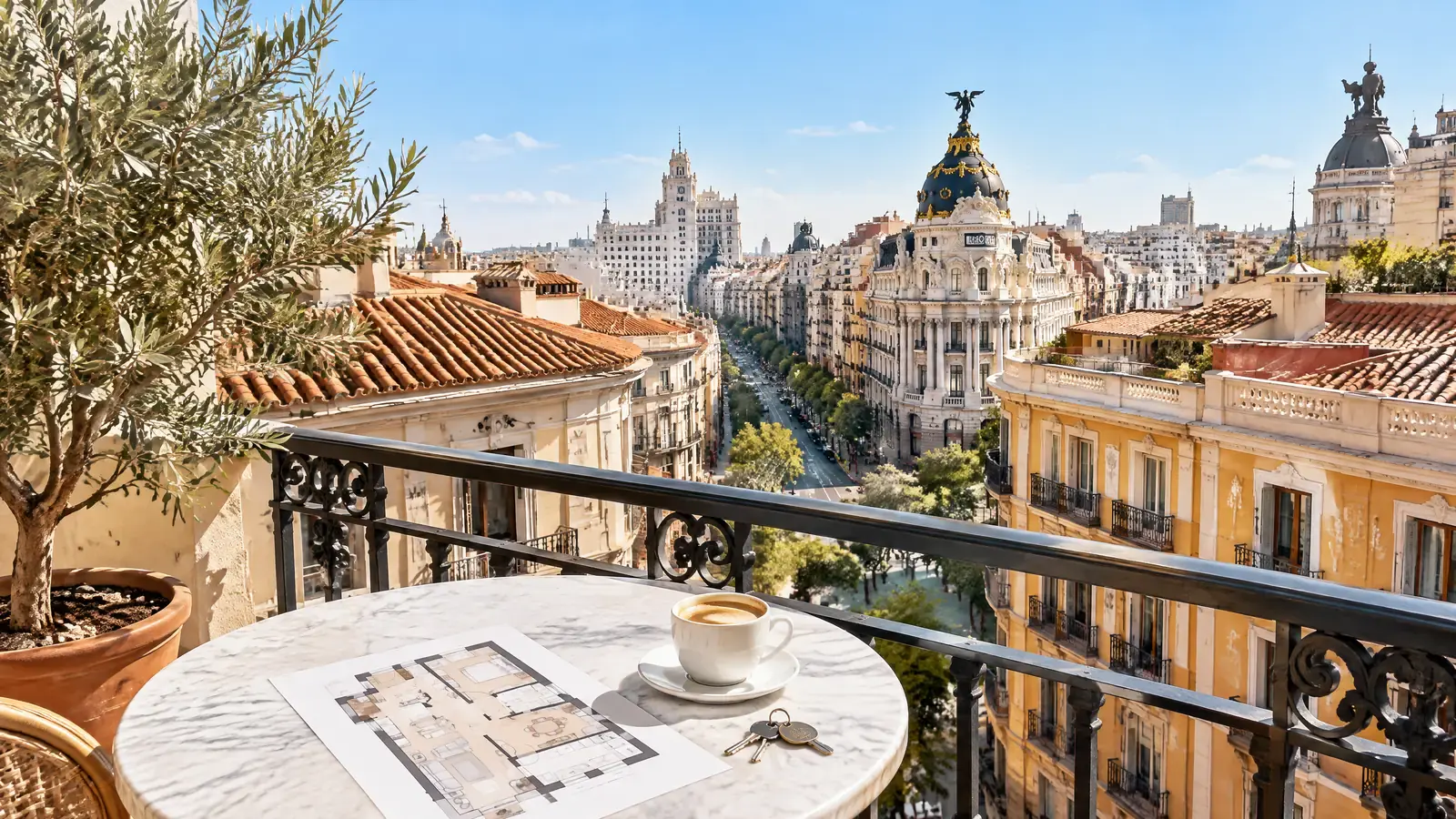
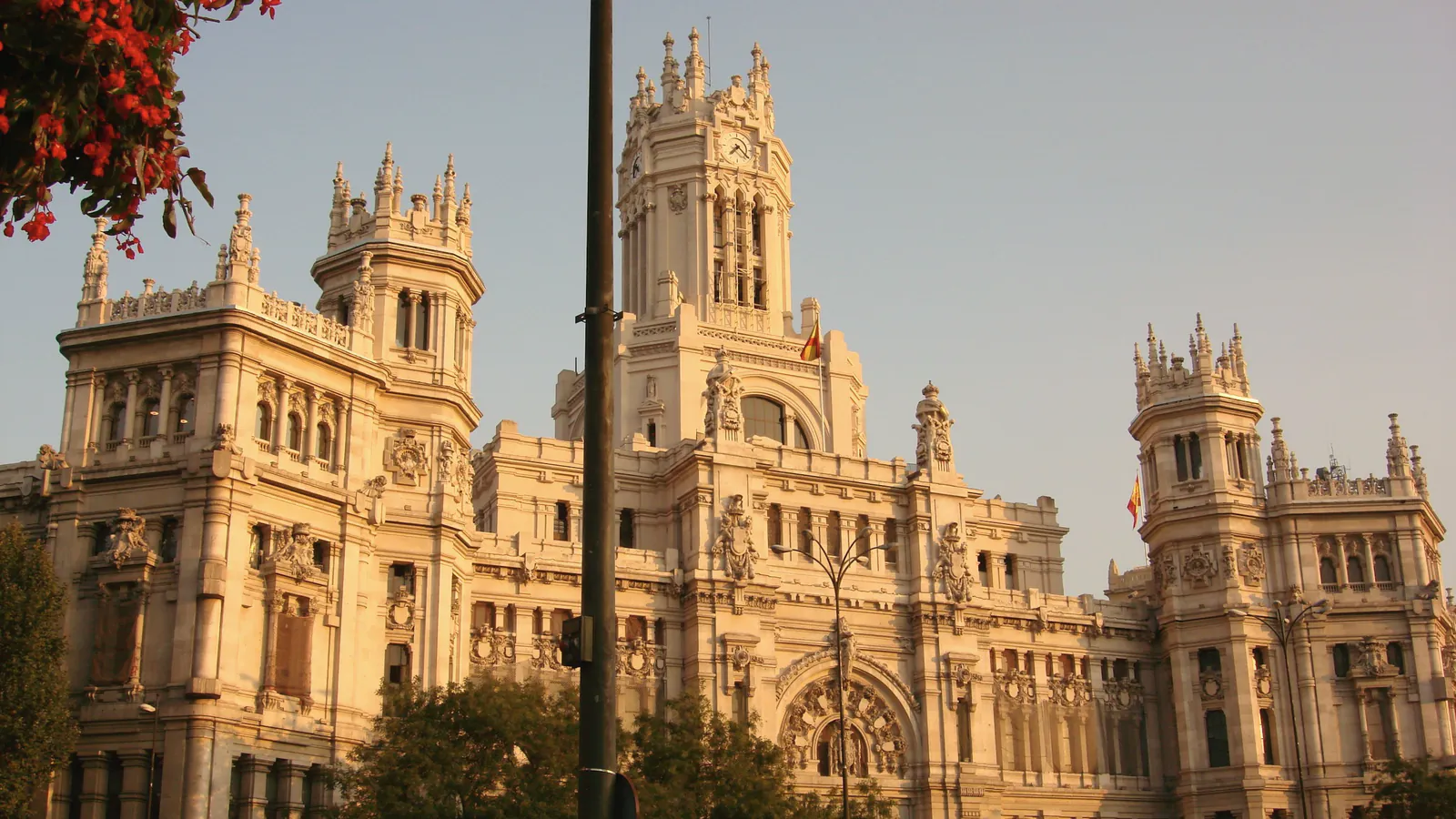
Madrid is one of Europe's major corporate, financial, and cultural hubs. It hosts key multinational headquarters, major banks, and over 120 foreign embassies. The city pairs dynamic business opportunities with an exceptional outdoor lifestyle, safe streets, and reliable public services.
What You Will Find Here
The quality of life here is high, with most prime residential areas located within 20 to 30 minutes of the city centre and primary business corridors like Paseo de la Castellana:
- Multicultural and welcoming atmosphere: A large international community where English is common in business environments.
- World-class transport: A clean, punctual metro system, extensive city bus routes (EMT), and fast regional trains (Cercanías).
- Culture and outdoor living: Nearly 280 sunny days per year, world-famous art museums (Prado, Reina Sofía, Thyssen), lively neighbourhood squares, and expansive green parks like El Retiro and Casa de Campo.
- Renowned international schools: A wide choice of campuses, including the Lycée Français de Madrid, American School of Madrid (ASM), British Council School, and International College Spain (ICS).
Rental Rates by Area
Rental rates vary depending on whether you choose a central city district (distrito within Madrid municipality) or an independent residential town (municipio in the wider metropolitan area):
- Salamanca (City District of Madrid): €20 – €40 / m². Prestigious central district with classic architecture and prime luxury shopping.
- Chamberí (City District of Madrid): €19 – €30 / m². Authentic central neighbourhood with lively pedestrian plazas, ideal for a walkable lifestyle without a car.
- Chamartín (City District of Madrid): €19 – €35 / m². Upscale business and residential district north of the centre, close to major offices and Chamartín train station.
- Hortaleza (City District of Madrid): €16 – €28 / m². Family-oriented area offering modern gated residences with swimming pools (Sanchinarro, Valdebebas) and detached villas (Conde de Orgaz).
- Pozuelo de Alarcón (Independent Municipality): €15 – €30 / m². Wealthy residential town west of Madrid, known for secure gated communities and family chalets.
- La Moraleja (Residential Area in Alcobendas Municipality): €22 – €45 / m². High-end residential enclave north of the capital, dominated by large private villas with 24/7 security.
- Majadahonda (Independent Municipality): €16 – €22 / m². Green western suburb featuring pedestrian high streets and spacious family flats.
- Tres Cantos (Independent Municipality): €13 – €20 / m². Planned modern town north of the city, known for safe gated complexes, extensive parks, and direct commuter train links into town.
Rates are indicative for long-term leases (typically unfurnished). High-end furnished corporate housing usually commands a 20% to 30% premium.
What’s the History of the Region?
Here is the broader Spanish context, along with how the Community of Madrid came to occupy its central role:
Spain’s Formation & Development
Spain’s modern history is rooted in the late 15th-century union of the Crowns of Castile and Aragon under the Catholic Monarchs, Isabella and Ferdinand, followed by centuries as a global maritime empire. After periods of monarchy, civil conflict, and authoritarian rule in the 20th century, Spain made a peaceful transition to democracy with the ratification of the Spanish Constitution of 1978.
Today, Spain is a parliamentary monarchy organised into 17 Autonomous Communities (Comunidades Autónomas) and two autonomous cities. Each region holds substantial self-governing powers over education, healthcare, local taxation, and housing regulations, while the central government oversees foreign affairs, defence, and national infrastructure.
Madrid’s Strategic Role
Unlike ancient capitals that grew organically along major sea lanes, Madrid was deliberately chosen. Founded in the 9th century as a Moorish defensive outpost named Mayrīṭ along the Manzanares River, it was designated as the permanent seat of the royal court by King Philip II in 1561 due to its central geographical position on the Iberian Peninsula.
In 1983, the province of Madrid was officially established as its own single-province Autonomous Community (Comunidad de Madrid). Today, it is not only Spain’s political capital but also its primary economic engine, aviation gateway, and a leading European hub for corporate headquarters, technology, and biotechnology.
Regional Identity & Governance
Madrid has evolved into an open, cosmopolitan region shaped largely by inward migration from the rest of Spain, Latin America, and Europe. Unlike regions with distinct co-official languages (such as Catalonia, the Basque Country, or Galicia), Madrid operates in Castilian Spanish and takes pride in a direct, welcoming culture, captured by the local saying: “Si estás en Madrid, eres de Madrid” (If you are in Madrid, you are from Madrid).
Geography & Environment
Perched on the high central plateau (Meseta Central) at roughly 650 metres above sea level, Madrid is the highest capital city in the European Union (and the second-highest in geographical Europe after Andorra la Vella). It sits just south of the Sierra de Guadarrama mountain range, which provides a natural outdoor setting for hiking and winter sports, supplies some of Europe's cleanest drinking water via the Canal de Isabel II, and gives the region its distinct continental climate characterised by crisp winters and hot, sunny summers.
What Languages Are Spoken?
Languages in Spain
Spain has one official national language alongside several co-official regional languages, depending on the autonomous community:
- Castilian Spanish (Castellano) – 100%: The official language throughout the entire country.
- Catalan / Valencian – approx. 17%: Co-official in Catalonia, the Balearic Islands, and the Valencian Community.
- Galician (Gallego) – approx. 6%: Co-official in Galicia (north-west Spain).
- Basque (Euskera) – approx. 2%: Co-official in the Basque Country and parts of Navarre.
- Aranese (Aranés): Co-official in the Val d'Aran (Catalonia).
In Madrid Specifically
In Madrid, the sole official and everyday language is Castilian Spanish. Unlike Barcelona, Valencia, or Bilbao, there is no second regional language to navigate. All municipal paperwork, public school curricula, signage, and neighbourhood retail operate entirely in Spanish.