Household Waste Sorting: Container Color Codes
Madrid maintains an organized, highly accessible waste separation system utilizing residential building bins, neighborhood street containers, and a network of municipal recycling centres (Puntos Limpios).
You do not need to purchase official taxed or city-branded rubbish bags; standard garbage bags available at any local supermarket are completely acceptable.
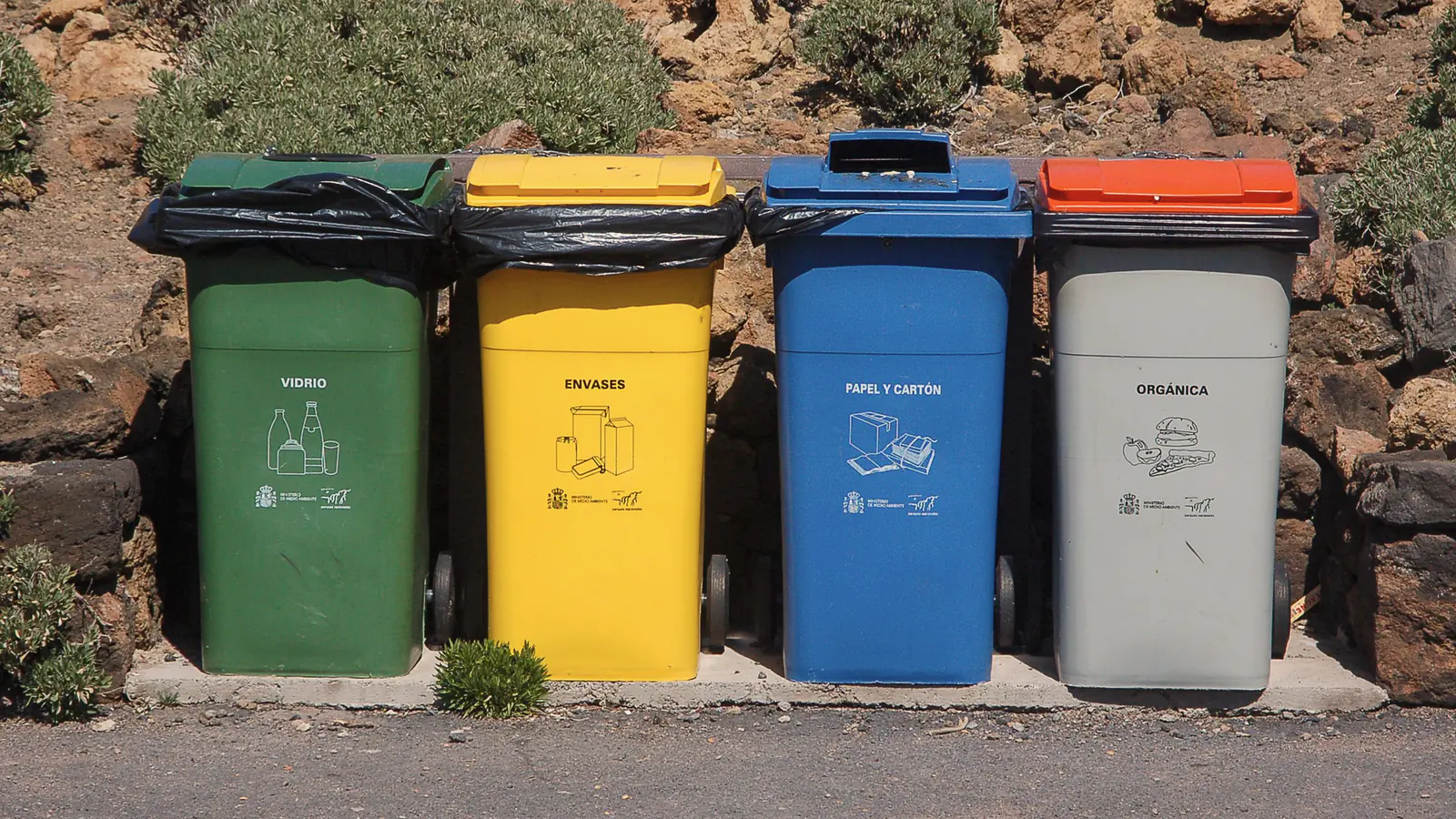
Residential buildings and public streets are equipped with five primary container types to separate household waste:
- Brown Lid (Orgánica): For compostable organic matter, including cooked or raw food scraps, fruit and vegetable peelings, meat and fish bones, eggshells, coffee grounds, tea bags, soiled paper napkins, kitchen paper towels, natural cork stoppers, and small domestic plant cuttings. These bins are collected daily (7 days a week), including Sundays and public holidays.
- Yellow Bin (Envases): For lightweight plastic and metal packaging and beverage cartons (plastic bottles, polystyrene trays, food and drink cans, aluminum foil and trays, empty aerosol cans, yogurt tubs, and plastic bottle caps). Plastic items that are not packaging (such as broken toys or plastic cutlery) do not go here. Collected daily (7 days a week), including Sundays and public holidays.
- Blue Bin (Papel y Cartón): For clean paper, newspapers, magazines, flyers, cardboard boxes, and flattened packaging. Paper and cardboard stained with food, grease, or paint must be placed in the general non-recyclable bin.
Ex : For Moving Boxes & High-Volume Cardboard, all cardboard must be completely flattened and folded before sliding it into the container slot. Never leave flattened or assembled boxes piled on the pavement next to the containers, the Madrid Municipal Police strictly fine street cardboard dumping (multa por abandono de residuos). For large volumes following your move, have your international movers haul them away, bring them directly to a permanent Punto Limpio Fijo, or arrange a dedicated curbside pickup.
- Green Container (Vidrio): Exclusively for glass bottles, jars, and condiment pots. Drinking glasses, crystal, ceramic tableware, window panes, and mirrors do not go into the green igloos, as their chemical composition disrupts glass recycling.
- Orange or Grey Lid (Resto no reciclable): For general non-recyclable household waste that cannot be sorted into other streams (dust sweepings, vacuum bags, pet litter, nappies, sanitary pads, wet wipes, and cigarette butts). Collected Monday through Saturday (no collection on Sundays or public holidays).
Residential Building Bins (Cubos de Madrid)
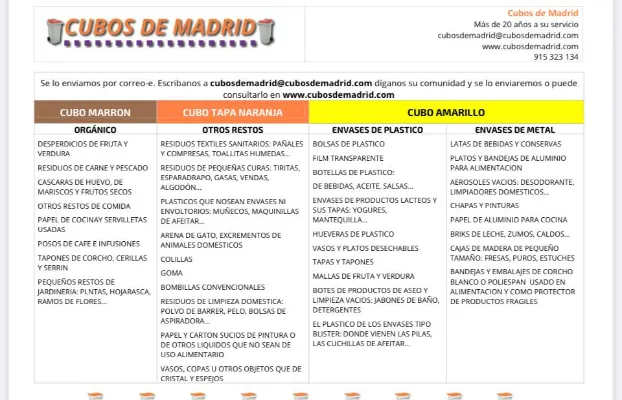
In most central Madrid apartment buildings, communal wheeled bins (brown, yellow, and orange) are stored in the building’s inner courtyard or designated basement refuse room.
The building concierge (portero) or an external contractor rolls them out onto the pavement each evening (usually between 20:00 and 22:00) for municipal overnight collection, and returns them indoors early the following morning. Large green glass igloos and blue paper containers remain on street corners permanently for direct public access at any hour.
Municipal Recycling Facilities: Puntos Limpios
For items that cannot be placed in standard household containers, the City of Madrid provides three tiers of complimentary municipal recycling facilities:
- Fixed Centres (Puntos Limpios Fijos): Large permanent recycling facilities located across Madrid’s outer districts designed for bulk waste, timber, renovation rubble, scrap metal, large domestic appliances, and hazardous chemicals (paints, varnishes, solvents, batteries). Open daily from 08:00 to 20:00 (09:00 to 14:00 on Sundays and public holidays). Cooling appliances containing refrigerants (fridges, air conditioners) must be delivered directly to these fixed centres.
- Proximity Points (Puntos Limpios de Proximidad): Compact indoor drop-off stations situated inside municipal sports centres, cultural centres, and community facilities. They accept routine domestic items, including printer cartridges, small electrical appliances, coffee capsules, aerosol cans, X-ray films, and used cooking oil during the host facility's operating hours.
- Mobile Collection Trucks (Puntos Limpios Móviles): Scheduled municipal trucks that park weekly at designated neighborhood locations and time slots for roughly 1.5 hours to collect domestic hazardous and electronic waste.
Bulky Furniture, Textiles & Specialized Items
- Bulky Waste & Furniture (Muebles y Enseres): Leaving mattresses or furniture on the pavement without authorization is strictly prohibited and subject to municipal fines. The city provides a free curbside collection service by appointment via the 010 citizen line, online at madrid.es, or via the official X account @lineamadrid. Alternatively, each neighborhood has a designated monthly free-drop evening where items can be left neatly beside the curb between 21:00 and 23:00.
- Clothing & Footwear: Wearable textiles should be deposited in official municipal clothing containers located on public streets, inside municipal fresh-food markets, at citizen service offices, or at any Punto Limpio.
- Used Batteries: Dedicated cylindrical battery bins are installed directly into city bus shelters, located near supermarket exits, and available across all Puntos Limpios.
- Cooking Oil: Never pour used cooking oil down sinks or drains. Store used vegetable oil in sealed plastic bottles and drop it into dedicated oil containers at municipal markets or Puntos Limpios.
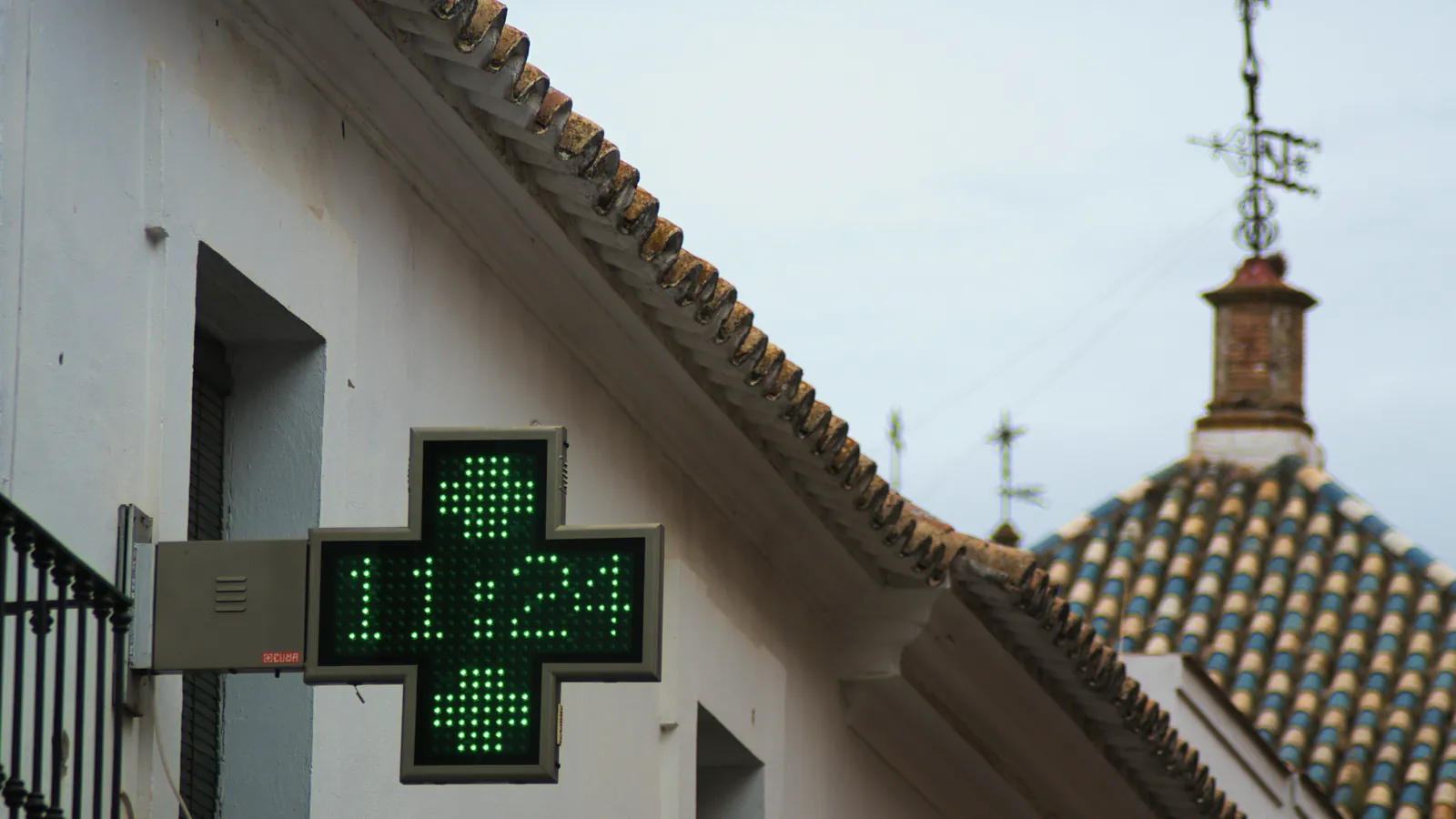
- Expired Medicines: Unused or expired medicines, blister packs, and empty packaging must be returned to pharmacies via the green Punto SIGRE drop-box.
- Municipal Reuse Platform (REMAD): Madrid operates an item-exchange platform called REMAD, enabling registered residents to donate and collect functional household items, toys, and books at fixed Puntos Limpios.
Frequently Asked Questions (FAQ)
Do I need to buy official city rubbish bags in Madrid?
No. Madrid does not use taxed, pre-paid, or city-branded trash bags. You can freely use any standard plastic bin bags purchased from local supermarkets.
(Note: While rubbish bags are untaxed, Madrid properties are subject to the municipal waste management tax, Tasa de Gestión de Residuos (TGR), billed annually by the city council based on property value and water usage).
How does waste collection work if I live in an apartment?
You simply place your tied trash bags into your building’s communal bins (stored in the courtyard or refuse room). The building concierge or an assigned contractor moves the bins out to the street each evening and brings them back indoors early the following morning. Glass bottles and large cardboard boxes can be taken directly to the permanent green and blue street containers in your neighborhood at any time.
How do I dispose of an old mattress or sofa?
Do not leave bulky furniture on the street unattended. Call the city contact line at 010 or submit an online request via the Madrid City Council website (madrid.es) to schedule a free pickup date directly outside your building entrance. The municipal service will provide a specific evening time slot to place the item neatly by the curb.
Where can I dispose of small electronics or hazardous items?
Small electronic appliances, printer cartridges, batteries, and cooking oil can be brought to a neighborhood Punto Limpio de Proximidad or the weekly mobile collection truck (Punto Limpio Móvil). Retailers are also legally required to accept your old domestic appliance free of charge when you purchase an equivalent replacement. Large appliances like refrigerators must go to a permanent facility (Punto Limpio Fijo).